
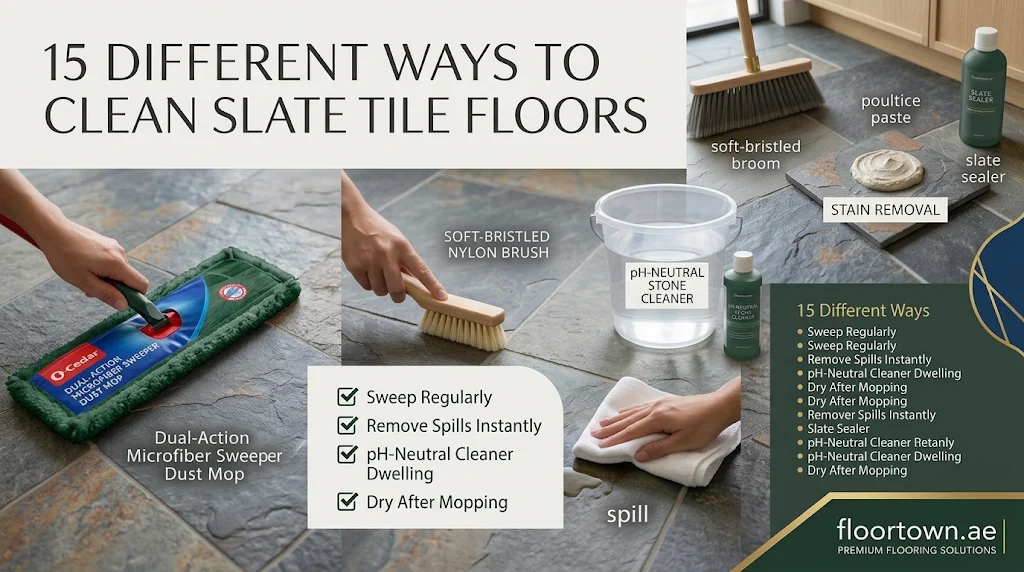
Slate tile floors are a stunning way to decorate homes, offices, and commercial areas. These tiles are one of the best flooring options because of their unique textures, colors, and earthy appearance. But slate is a natural stone and requires proper cleaning to keep it looking its best. Over time, the surface can become dull or dirty due to dust, spills, soap residue, and normal foot traffic.
The great thing about cleaning slate tiles is that it doesn’t need any complicated equipment or costly products. With proper cleaning techniques, you can remove everyday dirt, deal with tough stains, and maintain fresh floors. But harsh chemicals, abrasive tools, or excessive water use can cause damage to the stone or to its protective sealer.
Whether you need to clean the tile floors every day or need to clean them more thoroughly, this is a guide to the 15 best ways to do it. You will also learn about products to stay away from and how to maintain slate flooring for longer. So, without waiting any longer, let’s jump into it.
15 Different Ways to Clean Slate Tile Floors
After using these methods ourselves repeatedly and over many years, we decided to share them with others. Here are some of those methods:
1. Sweep the Floor Regularly
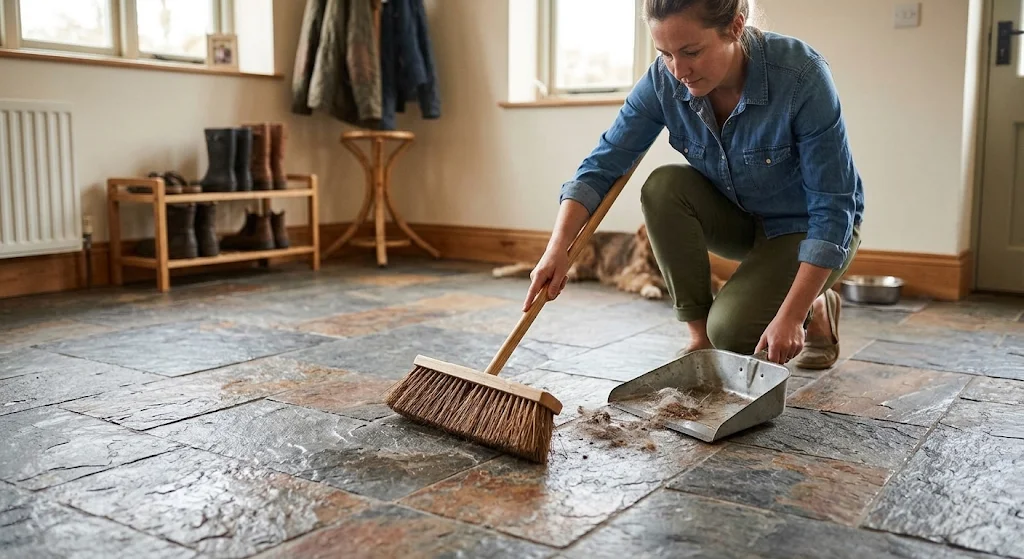
You have to use a soft-bristled broom to remove loose dirt, dust, and small debris. If you want to prevent dust particles from accumulating on the surface of your tiles, regular sweeping is essential. This also helps keep your shoes clean, ensuring that dirt isn’t tracked into other areas. You don’t need to sweep everywhere; just focus on the areas that see the most foot traffic. Avoid using a stiff wire brush for this task, as it can cause scratches.
2. Use a Microfiber Dust Mop
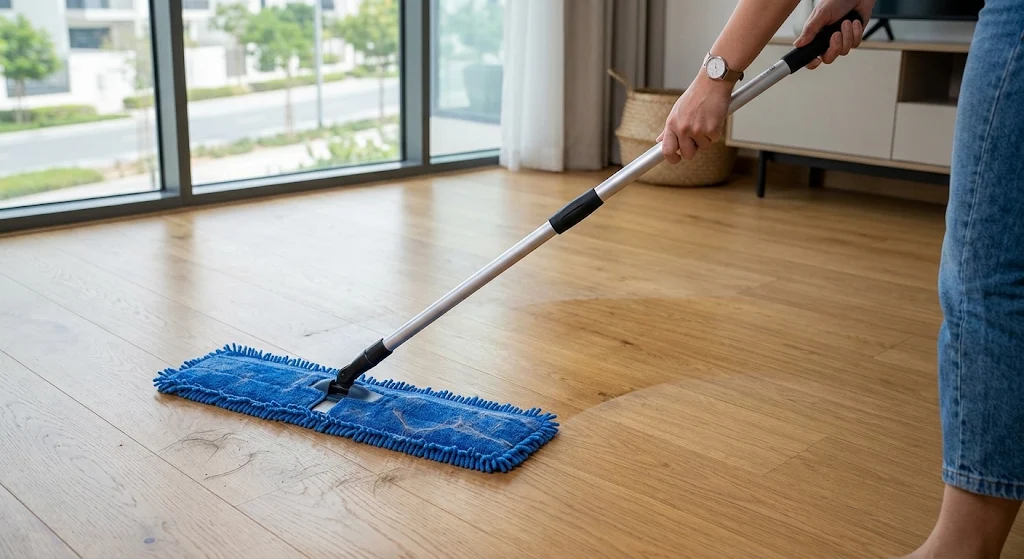
A microfiber dust mop can be used to pick up fine dust that regular brooms might miss. Its soft fibres do not cause too much scratching on textured areas. You have to gently sweep the floor with the mop, being careful of corners and edges. Regularly clean the mop head to prevent dirt from spreading on the surface. This is notably effective for regular maintenance tasks in between more thorough cleanings.
3. Use Warm Water to Wash
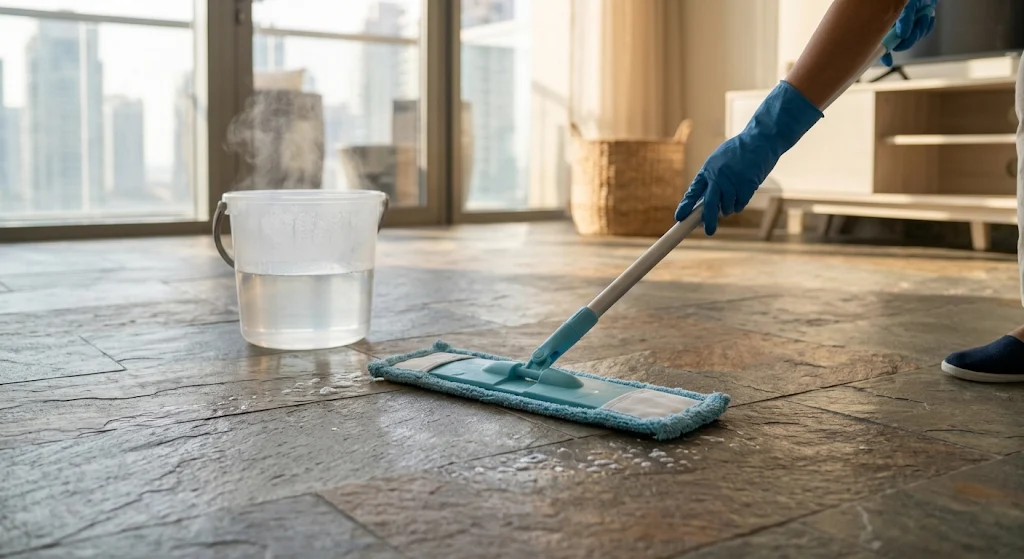
If you have a slate floor and the dirt on it is light, use water that can easily remove it. Place clean, lukewarm water in a bucket and wet a soft mop. Don’t leave slate floors soaking, so wring out excess water before cleaning. Use small areas and frequently rinse the mop. Once clean, use a clean microfiber cloth to dry and avoid water marks and residue.
4. Use a pH-Neutral Stone Cleaner
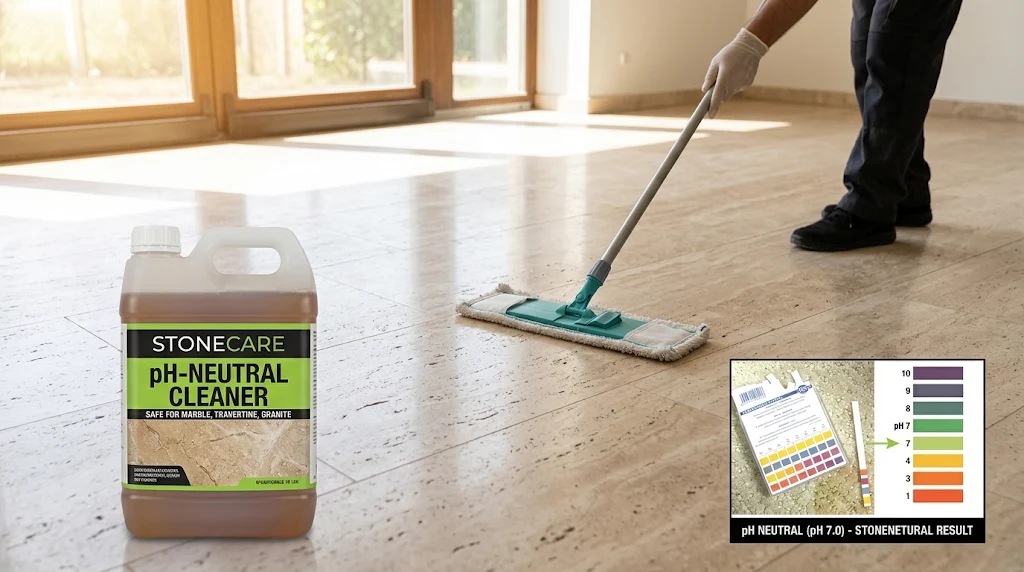
One of the best and safest slate tile floor cleaning options. These are made for cleaning natural stone without harming the stone if used properly. The main thing is that you have to follow the care instruction that label on the cleaner and then use a soft mop to apply on the floor. Do not use regular household cleaning products unless the label states that it can be used on slate.
5. Remove Spills Instantly
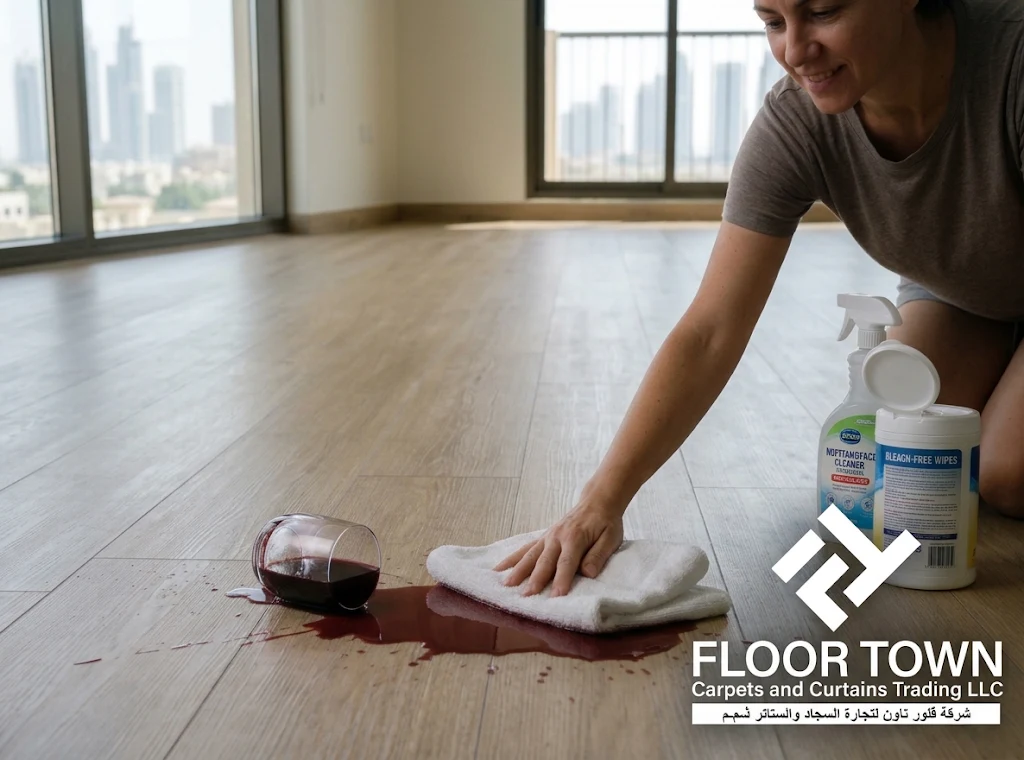
It is normal for a liquid to spill on the floor, but leaving it uncleaned for a long time is not a good practice. To address this, take a clean cloth and wipe up the liquid; afterwards, either turn on a fan or use a damp cloth to help dry the area. However, if something like paint or oil spills, clean it up immediately to prevent the substance from seeping into the seals, ensuring your floor remains fresh and clean.
6. Clean Grease with a Suitable Stone Cleaner
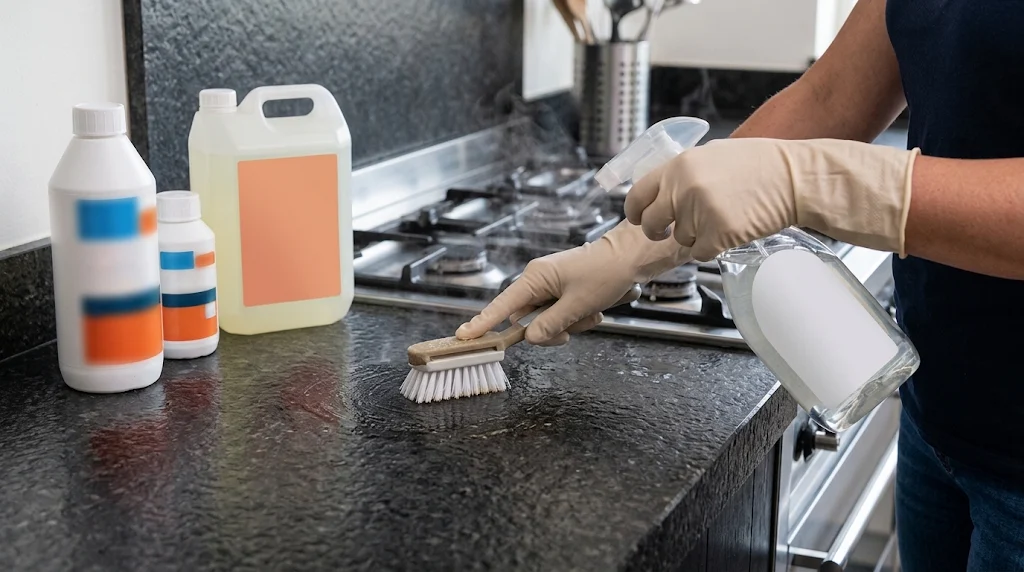
Grease stains are usually found in kitchen counters, cooking zones, and dining areas. Clean the stone with a stone-safe grease remover. Follow the instructions, and gently wipe with a soft cloth. Rinse and dry if necessary, according to instructions. Do not use strong degreasers unless they are approved for use with natural stone.
7. Clean with a Soft Brush for Textured Tiles
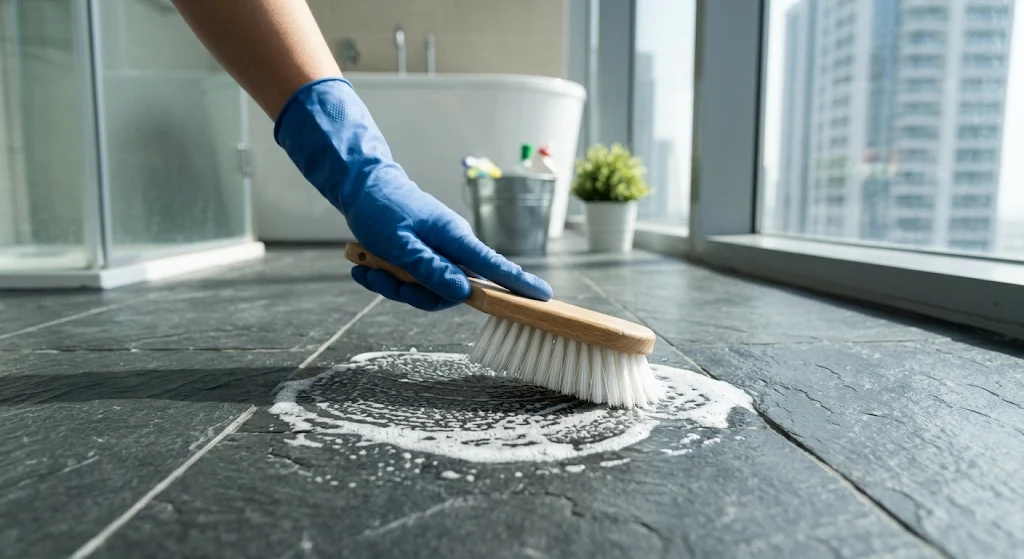
The surface of natural slate is not always smooth, and dust and dirt can gather. You can use soft nylon brushes that are effective at cleaning these areas that a flat mop. Dip the brush in a small quantity of the pH-neutral cleaner and lightly brush the textured areas. Avoid using too much pressure when scrubbing, as this can damage the finish. Use a damp microfiber cloth to remove any loose dirt.
8. Remove Soap Residue from Slate Floors
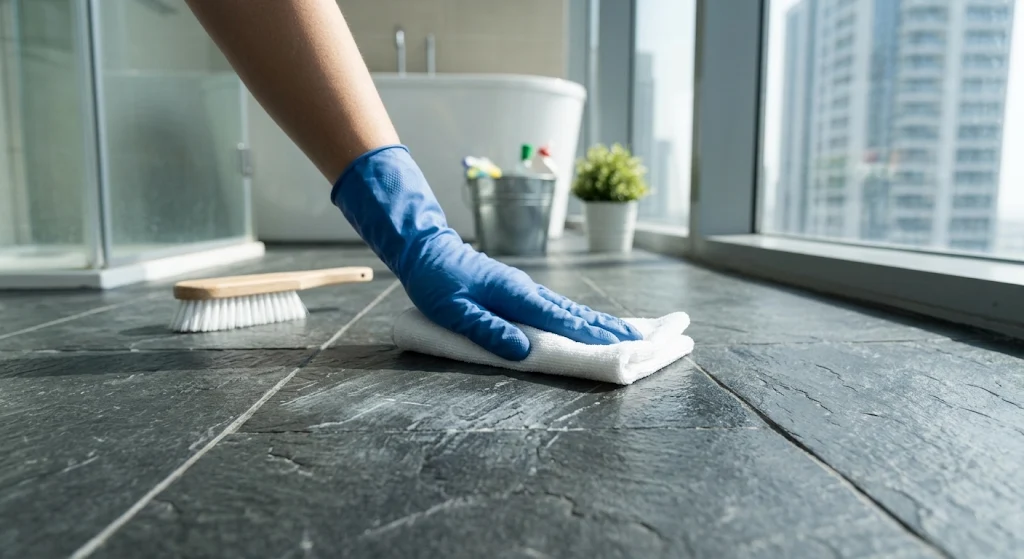
The soap residue may leave a film on slate tiles and cause the tiles to become cloudy, especially in the bathroom. We tell our customers to remove the buildup with a pH-neutral stone cleaner and clean water. Do not use too much detergent, as this can leave more residue. Follow the directions of the product and dry the floor with a clean towel. Good ventilation also enhances the drying rate of the surface.
9. Clean Water Stains Carefully
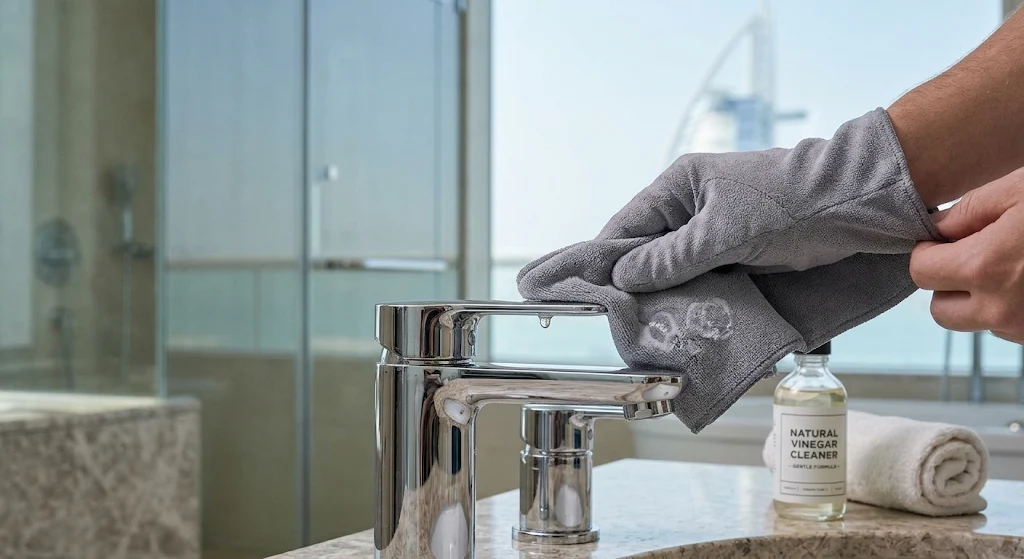
Water marks can appear when there are mineral deposits left behind after the water has dried. First, clean the area affected by water stains or water spills using a microfiber cloth. If the marks persist, use a specially formulated pH-neutral stone cleaner. Avoid using vinegar on tile floors and solid wood floors as its acidic nature can damage the appearance of the stone.
10. Apply a Stone-Safe Poultice to Stains
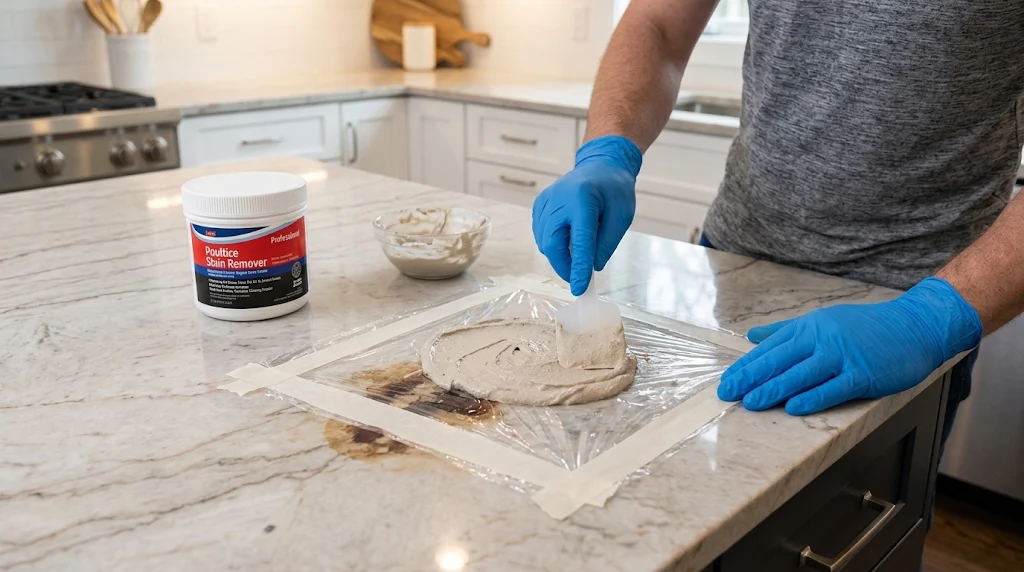
Normal mopping will not remove some deep stains. Some stains will come out of porous slate with the help of a poultice made for stone. These products usually include an absorbent material that is applied to the stain and left in place for a specific time. Different stains need different treatments, so use the product care label instructions.
11. Clean Bathroom Slate Tiles with Care
Slate bathroom floors are frequently wet, soapy, and used for personal hygiene. Sweep or dust-mop the surface, then use a pH-neutral stone solution to clean. Use a soft brush around grout lines to prevent buildup. Do not use bleach, acid bathroom cleaners, or scrubbers unless they have been approved by a stone care professional.
12. Dry the Floor After Mopping
Water marks may be left on the surface, and the risk of slipping increases when the slate is wet. After mopping, dry mop or use a dry microfiber towel to wipe off any excess water. You will need to focus very carefully, as water often collects in corners and textured areas; therefore, it is essential to ensure these spots are thoroughly dried.
13. Clean Slate Grout Lines Separately
Grout can get discolored more quickly than slate due to its tendency to absorb dirt and moisture. Use a grout cleaner that is known to be safe for the beside stone and then gently scrub the joints with a soft nylon brush. Do not let abrasive grout cleaners get on slate tiles. Rinse off the cleaner, as directed, and dry the area well. If the grout is still stained, it might be better to have it professionally cleaned.
14. Keep Slate Sealer
The proper stone sealer will help minimize the absorption of liquids and make cleaning easier. Sealing does not, however, make the floor stain-proof. Check the sealer care label instructions for maintenance and reapplication frequency. Make sure the floor is clean and dry before applying a new coat. If the finish is peeling, patchy, or discolored, consult a professional before resealing.
15. Schedule Professional Deep Cleaning
If you dont wanna do the work yourself, you can hire our experts; they will provide the best vinyl flooring, rubber flooring, and LVT flooring cleaning service, along with slate tile floor, especially if they have heavy stains or dirt. I would suggest hiring Floor Town company experts, who will thoroughly assess your stone floors and use the best cleaning products and equipment to ensure they are cleaned to perfection. They specialize in cleaning all types of floors, ranging from residential to commercial and industrial spaces.
How Often Should You Clean Slate Tile Floors?
The frequency of cleaning will vary based on the traffic, room use, and how much dirt enters your home. There’s a simple routine to avoid getting too much buildup.
Cleaning Task
Recommended Frequency
Sweeping, Dusting, Mopping
Daily or as Necessary
Damp Mopping
Weekly
Cleaning Spills
Immediately
Cleaning of grout
Monthly or as needed
Inspection by the Sealer
Periodically
Professional Deep Cleaning
When Needed Due to the Condition of the Floor.
Conclusion
When you have a regular maintenance plan and use products designed for stone floors, slate tile floors can be easily cleaned. Everyday dirt can be a bigger problem if it is not cleaned regularly, mopped gently, cleaned up quickly, and dried properly. If you have a difficult stain, use products that are formulated for natural stone and not harsh household chemicals. Don’t overlook grout lines and sealing the protective ones. When cared for properly, slate flooring can look gorgeous and be an integral component of your home for years to come. If you want to hire a professional deep cleaning company, then contact us now.